
Improving Goat Barn Drainage Before the Next Downpour
Rain does not need much encouragement to create trouble around a livestock barn. Unfortunately, we learned that lesson again this summer. Water collected in front of our dairy goat stalls, while straw, manure, and dropped alfalfa trapped the moisture underneath.
Although the surface sometimes looked dry, the ground remained soft and slick for days. As a result, every trip through the barn became an unpleasant shuffle across mud and decomposing barn debris.
More importantly, the wet ground created unhealthy conditions for the goats. Our milking does needed a firm, dry place to stand and walk. However, their hooves could not dry completely while they crossed the damp area several times each day. Prolonged moisture can soften hooves and contribute to foot rot and other hoof problems. Therefore, improving goat barn drainage moved ahead of several less urgent farm projects.
Starting Under the Stall Mats
First, Rick and I removed the heavy stall mats. Over time, the material beneath them had shifted and settled. Consequently, the mats no longer rested on a firm, level surface.
We added loose rock beneath the mats and carefully releveled each stall. Then, we reinstalled the mats over the improved base.
Because the rock allows water to move underneath the flooring, moisture should no longer remain trapped directly beneath the goats. In addition, the level mats provide a safer surface for the does to stand on while eating and resting.
The job required plenty of lifting, adjusting, and second-guessing. Nevertheless, the finished stalls immediately felt more stable.
Adding Rock in Front of the Barn
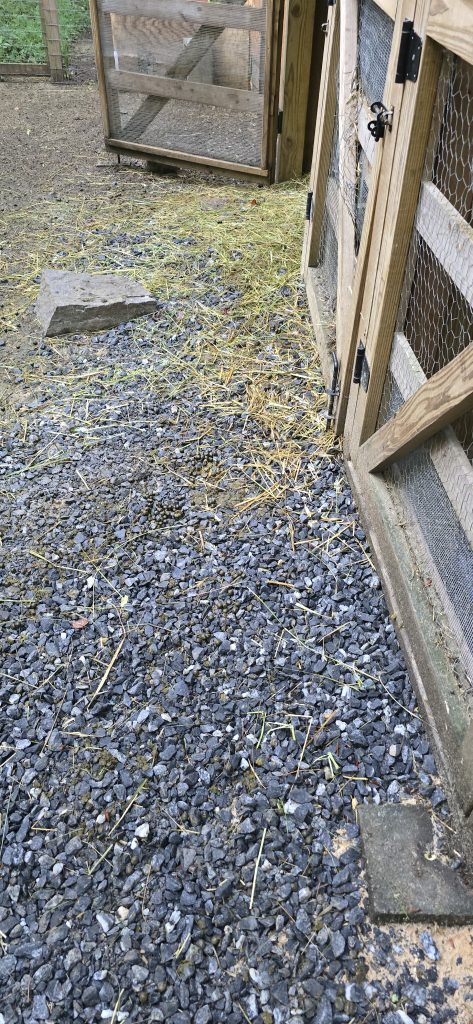
Next, we spread smaller rock across the worst area in front of the stalls. Previously, every hoofprint and boot print pressed organic material deeper into the mud. Meanwhile, each new rainstorm added another layer to the mess.
The new rock gives water space to drain instead of pooling at the barn entrance. Furthermore, it provides a cleaner and less slippery walking surface for both goats and people.
This stage of improving goat barn drainage does not solve the entire problem. However, it gives us a much better foundation while we prepare for the next phase.
Gutters and Rain Barrels Come Next
Ultimately, we need to stop roof runoff from landing in front of the stalls. Gutters offer the obvious solution, but the barn needs some preparation before Rick can attach them securely.
Once the gutters are installed, we plan to connect them to rain barrels with appropriate filters. Then, we can use the collected water to rinse barn areas or provide animal water when needed.
Additionally, the barrels will reduce the amount of water flowing toward the stall doors. They will also save us from carrying as much water down from the main spigot near the house.
Although we have experienced frequent downbursts, our region continues to struggle with drought conditions. Therefore, capturing rainwater makes sense for both drainage and future water needs.
For now, the rock has already made the barn cleaner, firmer, and easier to navigate. The project may lack polished farmhouse charm, but dry hooves and safer footing matter much more than pretty pictures.