
Green with Patience: Protecting Tomatoes and Pollinators
Some parts of our garden have rushed headlong into summer, while others seem determined to take their time. The zucchini and yellow squash continue to flourish, giving us more to pick every time we walk through the garden. Meanwhile, the tomatoes have moved at a much slower pace this year.
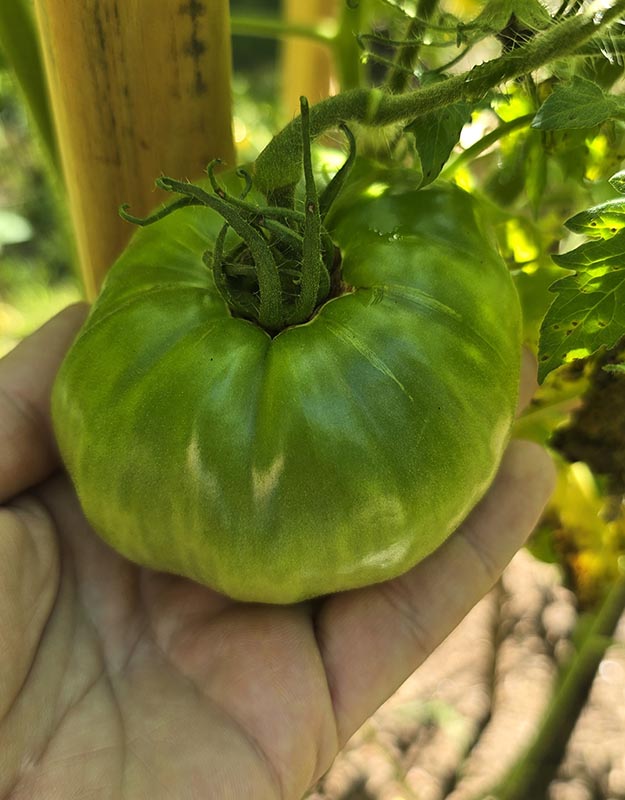
The large green tomato in this photo grows on one of my heritage Mortgage Lifter plants. I could not resist slipping my hand beneath it to feel its weight and admire the promise of what may still come. After spending so much time pruning, tying, inspecting, and worrying over these plants, finding a tomato this size feels encouraging.
Hornworms Never Miss a Meal
Unfortunately, the hornworms have also noticed the tomatoes.
These large green caterpillars blend almost perfectly into the foliage, but their appetites quickly reveal them. We have already found several, and one managed to eat nearly an entire smaller tomato plant before we caught it. When you grow without routinely using pesticides, checking each plant becomes part of the daily garden walk.
We remove the hornworms by hand whenever we find them. However, the amount of damage convinced us that we needed another layer of protection. We chose a spinosad product labeled for tomatoes. Spinosad comes from a naturally occurring soil microorganism and disrupts the nervous system of insects that eat or come into contact with it.
Some Spinosad products qualify for organic gardening, but organic does not automatically mean harmless to every insect. Protecting tomatoes and pollinators requires careful timing because wet Spinosad can harm bees. Therefore, we follow the label, avoid spraying open flowers, and apply it after pollinators have finished working for the day.
When the Rain Keeps Coming
Constant rain has caused problems in several areas of the farm. We have already battled drainage issues at the does’ barn, and the tomatoes have suffered as well. Repeated rain damages the leaves and creates ideal conditions for fungal and bacterial diseases.
Although I have pruned the plants heavily, tied the vines up, and tried to improve airflow, the leaf damage continues. We recently applied a copper fungicide in hopes of slowing its spread.
Copper fungicide leaves a protective coating on the foliage. Copper ions interfere with proteins in fungi and bacteria, which helps prevent new infections from becoming established. However, it cannot repair leaves that already show damage.
Copper generally poses little direct risk to bees, but we still use it carefully. Too much can injure plants, accumulate in the soil, and harm aquatic life through runoff. Moderation, timing, and label directions matter with both products.
For us, protecting tomatoes and pollinators means paying attention, choosing the narrowest tool available, and using it only when necessary. Despite the hornworms, spotted leaves, and slow-ripening fruit, we remain thankful for the rain. We only hope it begins to ease the drought our mountains have carried and leaves us enough tomatoes for a very good sandwich.