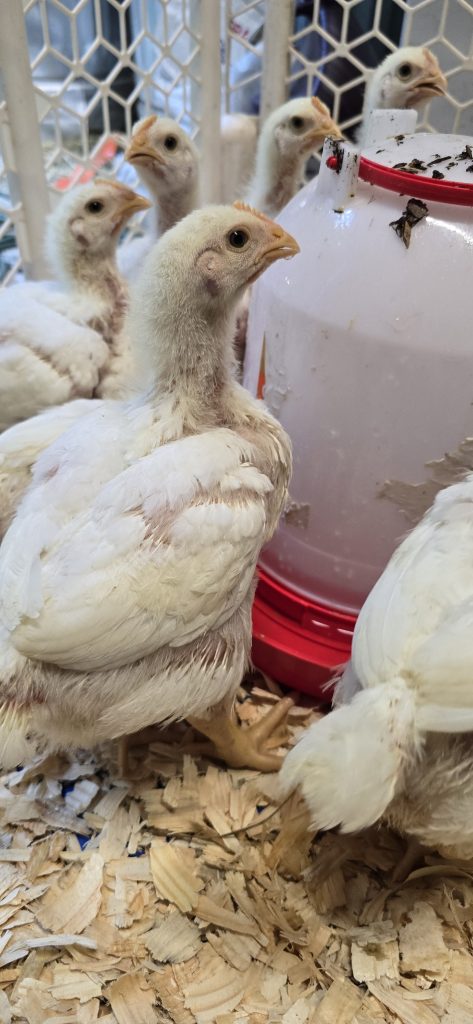
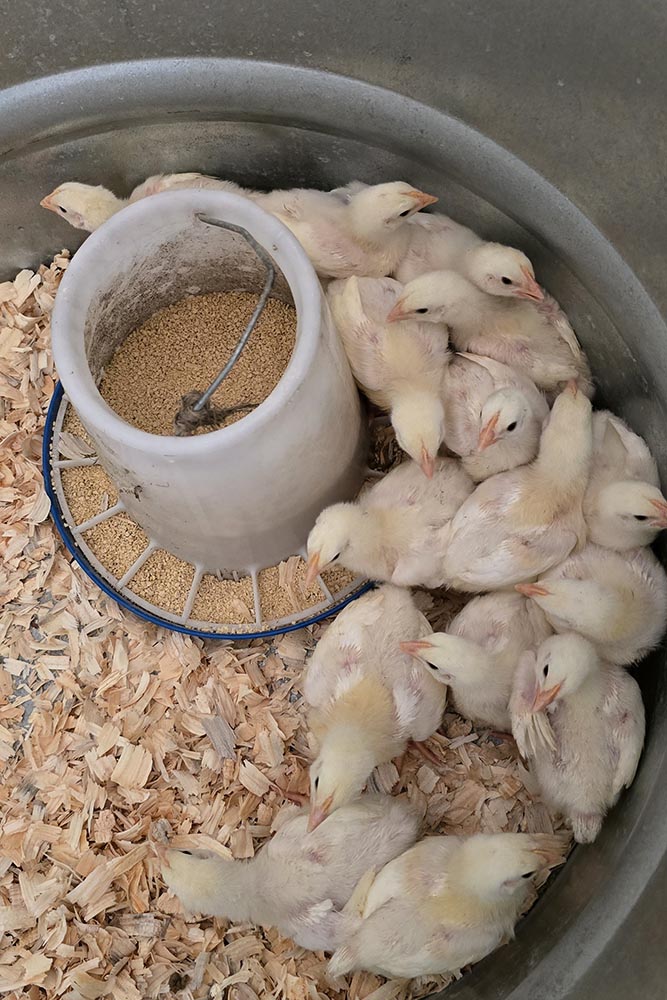
When our 15 meat chickens first arrived at The Tart Farm, they cost just $1 each. Eight weeks later, those tiny chicks had become whole roasting chickens weighing between 5 and 6½ pounds each. So, did each chicken really cost us only one dollar? Not even close! Let’s do some meat chicken math!
The one-dollar price paid for the chick. However, raising an animal also requires food, bedding, equipment, time, and work. That makes the cost of raising meat chickens a great real-life math problem. We rounded some of our numbers to make the calculations easier. Therefore, our answers are close estimates rather than exact accounting figures.
Start with the Chicks
We raised 15 chicks, and each chick cost $1. 15 × $1 = ? How much did we spend on chicks? Write down your answer before moving on.
Now Add the Feed
Growing chickens eat a lot. During their eight weeks at the farm, our flock ate about four bags of organic grower feed. Each bag actually cost $24.50, but we will round that to $25 for our math problem. 4 × $25 = ? How much did we spend on feed? Now add that amount to the cost of the chicks.
Don’t Forget the Bedding
We also used about $15 worth of wood shavings during the eight weeks. The shavings helped keep the chickens’ living area clean and dry. Add another $15 to your total. So far, you have included:
This post discusses the final stage of raising chickens for food but does not include graphic photographs or descriptions.
Eight weeks ago, they arrived as dollar chicks. This morning, each one entered our freezer as a vacuum-sealed whole roasting chicken weighing between five and six-and-a-half pounds. Except for the lack of a foam tray and printed label, they could have come from a grocery-store meat case. However, we knew every step that brought them there. For us, raising meat chickens responsibly meant more than feeding them until they reached the proper size. It meant providing clean bedding, fresh water, appropriate feed, daily observation, and a fast, humane end. Our responsibility to the birds continued through every stage of processing and cleanup.
From Chick to Roasting Chicken
These chickens differed greatly from the laying breeds we also keep. Breeders developed broiler chickens specifically for meat production, so they grow much faster and carry considerably more weight than laying hens or most dual-purpose breeds.
Their final weights reflected that difference. Each finished as a whole roasting bird between five and six-and-a-half pounds, without the gizzards or other giblets included. We began processing on Thursday afternoon. First, we dispatched each bird as quickly and humanely as possible. In farming, dispatching means ending an animal’s life with as little fear and discomfort as we can manage. Next, we plucked and carefully prepared each chicken. We then chilled the birds thoroughly in a cooler filled with ice. This morning, we vacuum sealed every chicken and placed them in the freezer. Two people completed the processing in approximately three hours.
Clean Birds Begin with Clean Living Conditions
Broiler chickens grow rapidly and spend much more time resting on the ground than our other chickens. Because of that, their bedding required careful attention. A bird that continually rests on wet or dirty bedding can develop irritated skin or pressure sores, somewhat like a person who remains in one position for too long. Although these chickens had a talent for settling directly into the messiest available location, we kept replacing and cleaning their bedding.
That work paid off. None of the birds had sores, damaged skin, or other noticeable blemishes when we processed them. The small size of our flock also allowed us to watch the birds individually. We checked their movement, skin, bedding, food, and water ourselves. They ate organic feed throughout their eight weeks here and received no medications. That direct supervision was one of the greatest benefits of raising them on our farm. We did not have to wonder what they ate, how they lived, or what condition they were in. We saw it every day.
Cleanliness After Processing Matters Too
We paid close attention to cleanliness while preparing the chickens for our freezer. Food safety provided one very important reason, but life in the Western North Carolina mountains supplied another. Anything left behind could attract flies, rodents, scavengers, or even bears. Therefore, the processing area, tools, containers, and surrounding ground all required a thorough cleanup. The job did not end when the final chicken entered the cooler. Black bears can smell food for a long distance; the WNC Nature Center states that can be within a ten mile radius which means our farm falls into the Center’s range! Responsible farming includes caring for the surrounding land and wildlife, too. Feeding a bear through careless cleanup would not benefit the bear, our family, or anyone else nearby.
Respecting the Purpose of the Flock
These birds came to The Tart Farm for a specific purpose. They were not laying hens or pets that unexpectedly became food. From the beginning, we planned to raise them as carefully as possible and use them to feed our family. That knowledge did not make processing casual or thoughtless. Instead, it made good care even more important. Raising meat chickens responsibly required daily work, considerable cleaning, close observation, and attention during every stage of processing. It also taught us far more than we could have learned by reading instructions alone. Now, our freezer holds a generous supply of clean, whole chickens. We know what they ate. We know how they lived. We know how carefully we prepared them. Soon, we will roast the first one and complete the final step in their journey from dollar chicks to family meals.
We learned plenty during these eight weeks, including one lesson hidden inside that original one-dollar price tag: a dollar chick does not produce a one-dollar chicken.
Coming next: What Did Our Dollar Chickens Really Cost? In our farm math investigation, students can use the flock’s real numbers to calculate expenses, cost per bird, cost per pound, labor value, and the special problem created by equipment that we can use again.
Eight weeks ago, our “dollar chicks” arrived as small, fuzzy question marks. Now, they crowd around the feeder like a flock of feathered footballs. In one more week, we will butcher them. My sister is coming up from Florida to help Rick and me, turning processing day into a family effort as well as the final step in raising Cornish Cross chickens.
Eating Is Their Favorite Chicken Activity
These birds have certainly made us laugh. However, they do not spend much time doing traditional chicken things. They rarely scratch, explore, or race across the pen with the enthusiasm of our laying breeds. Instead, they focus on their life’s great mission: eating. Then they rest, eat again, and somehow look surprised when the feeder needs another refill.
Of course, all that food creates an impressive amount of waste. Keeping their bedding dry and their housing and yard clean has required far more time and labor than we expected. Therefore, before we raise another batch, we will need a different setup. A movable shelter or another system that manages soiled bedding more efficiently could reduce our workload while still protecting the birds’ health and comfort. This first group has taught us that good intentions need practical infrastructure underneath them.
A Short Life with Good Care
Despite the extra work, we have enjoyed raising Cornish Cross chickens. They have quiet, mild temperaments, and the entire group has remained together in a roomy area with their hatch mates.
Commercial broilers generally do not live in individual cages. Instead, many live by the tens of thousands inside large enclosed sheds, often with little room as they approach processing weight. The ASPCA’s overview of animals on factory farms provides more information about commercial meat-chicken housing and rapid-growth welfare concerns. Content warning:The linked page contains upsetting descriptions and images of commercial farming conditions.
Processing day will still carry weight. We have cared for these birds every day, and enjoying them does not erase the purpose for which we raised them. At the same time, “saving” fast-growing Cornish Cross birds by keeping them indefinitely is not a simple or necessarily kinder option. As they continue growing, their genetics can place increasing strain on their legs, hearts, and other organs.
Soon, our freezer will hold meat from birds we raised ourselves. We know they received organic feed and no antibiotics. We also know their meat will not contain an injected broth or seasoning solution. Most importantly, we know their short lives included fresh air, room to move, clean water, attentive care, and the company of their flock.
That knowledge does not make the final day easy. It does, however, make the full circle honest.
One week later, the growing meat chicks have already changed. They eat with impressive focus, drink constantly, and move through the brooder with more confidence every day. Because Cornish Cross chicks grow so quickly, I expected them to look different fast. Even so, watching it happen still feels a little ridiculous. The brooder that looked roomy at first now looks much more temporary.
One Small Fighter
However, one of the fifteen dollar chicks has not kept up with the others. This chick looks smaller, has fewer feathers, and seems weaker than the rest. Still, it keeps pushing forward. It gets to the feeder, eats as much as it can, and keeps trying even when the bigger chicks crowd around like tiny feathered bulldozers. For now, we are watching closely, making sure it can reach food and water, and giving it every fair chance to keep fighting.
What Comes Next
Meanwhile, the rest of the meat chicks keeps growing exactly the way meat chicks do: fast, hungry, and messy. Soon, we will start planning their move from the brooder to the 10×10 covered run. First, they need enough feathering and the right weather to be outside without extra heat. After that, they can stretch their legs, get more fresh air, and finish growing with more room.
We went to Tractor Supply for dog treats. That was the whole plan. No chicks. No livestock. No side quest to add more chores to the list.
However, farm errands have a way of growing feathers when no one is watching. Somewhere between the dog treats and the checkout line, I found fifteen Cornish Cross chicks marked down from $4.50 each to $1 each. At that point, the tiny farm accountant in my head started shuffling papers.
These were not day-old chicks, either. They were already about two weeks old, which meant they had passed the most fragile brand-new-baby stage. Since Cornish Cross chickens grow quickly and are usually butchered before they reach ten weeks old, this was not a long-term livestock commitment.
Instead, it looked like a short, practical meat bird project with a very persuasive price tag.
So I looked at my husband and asked if I could buy them. His expression said many things. Mostly, it said he has known me for a long time.
The Long-Suffering Husband Face
Some husbands hear “I’m just going in for dog treats” and believe it. Mine knows better.
By now, surprise is no longer in his wheelhouse of emotions. Instead, his face settled into that familiar long-suffering expression that appears whenever a simple errand turns into chicken math. I could practically see him reviewing every brooder, feeder, waterer, heat plate, extension cord, and corner of the property in his head.
To his credit, he did not say no. Also, to my credit, I did not come home with goats. This time.
Why the Chicks Made Sense
Although the purchase was not planned, the dollar chicks made sense. Cornish Cross chickens are not slow, decorative backyard philosophers. They are meat birds, and they grow with astonishing barnyard urgency. Because these chicks were already two weeks old, they had already moved through part of the brooder stage before I ever saw them. That made the sale even more tempting. Instead of starting from day-old chicks, we brought home birds with a little size and momentum. Since we already had equipment from hatching our own eggs in the past, we did not need to make a dramatic farm supply scramble. In fact, I set up the brooder in about fifteen minutes.
That may be the most dangerous kind of farm project: the kind that can justify itself with both math and convenience.
A Quick Brooder Setup
For now, the dollar chicks are settled into a brooder with equipment we already had on hand. They have heat, food, water, bedding, and enough space to get started. Still, Cornish Cross chicks grow so quickly that “plenty of room” can turn into “who installed all these chickens?” before anyone has finished a cup of coffee. Because of that, this brooder setup will not last long. Next, we will watch their size, feathering, and the weather. Once they can stay outside without a heater, they will move into a 10×10 covered run.
The Next Move Outside
The 10×10 run will give them more room, fresh air, grass, and protection while they finish growing.
Meanwhile, it will also move the smell, dust, and general chick chaos out of the brooder area. Everyone in the household will appreciate that. Especially my husband. Probably. Since these birds grow fast, the outside setup matters. They need space, shelter, food, clean water, and protection from both weather and predators. Fortunately, we already had enough of the pieces in place to turn an impulse purchase into a workable farm project.
The Farm Math of It All
Was this planned? No.
Was it practical? Actually, yes.
Fifteen Cornish Cross chicks at a dollar each felt like one of those small farm opportunities that only makes sense when you already have the setup, the space, and the willingness to rearrange your afternoon. Luckily, we had all three. So now The Tart Farm has fifteen fast-growing birds, one quickly set up brooder, and one husband who deserves credit for surviving another Tractor Supply plot twist. The dollar chicks may not have been on the shopping list, but dog treats were not the only thing that came home that day. I maintain that I showed restraint. After all, they were only a dollar.