
Building Bert’s Greasy Bean Trellis
Why Bert’s Greasy Beans?
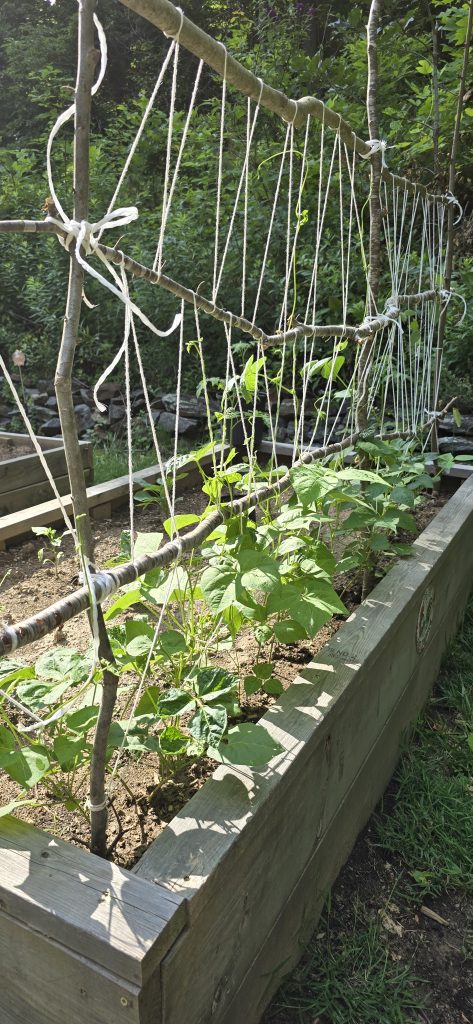
My Bert’s Greasy Bean trellis started with small saplings that already needed thinning, cotton string I already had, and poly twine left over from other projects.
In other words, this trellis cost me nothing out of pocket this season.
I chose Bert’s Greasy Beans because they belong to this area in a way that feels specific and practical. They are not just another bean in a seed packet. Around here, greasy beans show up as a specialty bean at the farmers market, and they tend to sell out fast because people know what they are. Demand stays high, and supply stays limited, which tells me they are worth growing if I have the space and the patience.
Building the Trellis from What I Had
For the Bert’s Greasy Bean trellis, I set one sapling upright on each end and one in the middle. Then I lashed more saplings horizontally across the three posts. Between each level, I zig-zagged cotton string into little triangles so the vines would have plenty of places to grab.
At first, the trellis surprised me. The first two horizontal saplings made the whole thing feel sturdy enough that I stood back and thought, “Well, look at that actually working.” However, as I added more levels and the beans traveled higher, the trellis started to flex a little more. That makes sense. Bean vines may look delicate, but once they climb, leaf out, and start producing, they bring real weight with them.
So, I may add support lines later to keep the trellis steady. For now, though, it is doing exactly what I need it to do.
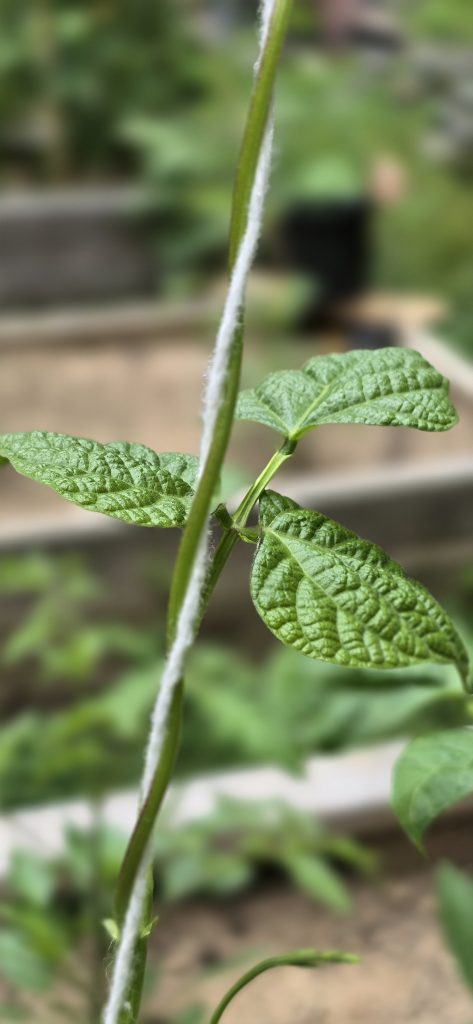
The best part came the next morning after I added another horizontal branch. The vines had already found the string and started curling around it. They did not need a fancy garden structure or anything from a catalog. They just needed something to climb.
Planning for Leather Britches and Seed Saving
Last year, I grew greasy beans and dried all of them into leather britches. Traditionally, people threaded the beans in their pods and hung them to dry. I used a dehydrator instead, because I like old ways, but I also appreciate a plug and a button when life is already full.
After drying, you soak leather britches overnight. Then, the next day, you cook them like greens with salted pork or fatback. This year, I hope to save some beans for seed, dry more for shelf-stable vegetables, and keep building food storage that does not all depend on canning.
That is why this Bert’s Greasy Bean trellis makes me happy. It uses what I had, supports a bean that belongs here, and helps turn a cleared patch of saplings into food for later.
Use what you have. Thin what needs thinning. Let the beans climb.