Category: Farm Life

Why Goats Work for Our Family and Our Milk Supply

Land was only part of our decision to keep dairy goats instead of a cow. We also had to think about milk, animal size, daily work, and what our family would actually use.
That is why choosing a dairy animal is about much more than deciding which animal gives the “best” milk.
For us, goats fit the scale of what we need.

The Right Amount of Milk Matters

A good dairy cow can produce an impressive amount of milk. That can be wonderful if you have a large family, make a great deal of cheese, or have another good use for all that milk. For us, that amount could quickly become too much. Our goats give us enough milk to do quite a lot without moving our entire life into the dairy. We drink it, cook with it, and turn it into chèvre, mozzarella, cottage cheese, ricotta, cajeta, and other foods. Their production also gives us enough extra milk to support a small number of herd shares.
That scale works for us.

Why Goat Milk?

Goat and cow milk are more alike than some internet claims suggest. However, goat milk does have differences in its fat and protein structure. Research also shows that goat milk contains relatively high amounts of short- and medium-chain fatty acids. A review available through the National Institutes of Health explains several of these differences. Some people find goat milk easier to digest. Still, it contains lactose, and people with a true cow-milk protein allergy should not assume goat milk is a safe substitute. The National Library of Medicine notes the high degree of cross-reactivity between cow and goat milk proteins.

For us, the attraction is much simpler.
We like it. Fresh, properly handled goat milk tastes mild and works beautifully for the foods I want to make. I also like following the milk from the animal, to the bucket, to the kitchen, and finally to whatever happens to be bubbling, draining, or setting on the counter that day.

Smaller Does Not Mean Easier

I would never recommend goats simply because someone heard they were an “easy” alternative to cattle. Goats apparently missed the meeting where that was decided. They need strong fencing, good nutrition, hoof care, shelter, health monitoring, and parasite management. During lactation, dairy goats also need regular milking. Their smaller size makes some jobs easier for us, but they are still a daily responsibility.

That is why choosing a dairy animal should include an honest look at your household as well as your pasture. Think about how much milk you will use, how much animal you can safely handle, and how the daily chores will fit your life. The best dairy animal is not the biggest producer or the one that looks most like a traditional homestead. It is the one that fits.
For us, that is a goat.

And, admittedly, quite a lot of cheese.

Categories: Dairy Goats Farm Life

Why We Chose Goats Instead of a Cow

When people picture a small homestead with fresh milk, a certain storybook image often comes to mind: a family milk cow standing peacefully in a green pasture.
I love that image.
It just isn’t our farm.
One of the most important parts of choosing livestock for your homestead is looking beyond how many acres you have. You also need to consider what those acres actually look like, what grows there, and what the animal needs to thrive.
For us, those questions led to goats.

Acreage Doesn’t Always Equal Pasture

Fenced woods for livestock

We have acreage, but much of our mountain property is wooded, sloped, and decidedly uninterested in becoming a postcard-perfect cow pasture.
That matters.
Cattle are mainly grazers and make good use of grasses. Goats, however, are browsers. Given the choice, they happily eat leaves, vines, weeds, shrubs, and other plants growing above ground level.
In other words, some land that looks pretty unimpressive from a cow’s point of view looks suspiciously like a salad bar to a goat. NC State Extension explains that when goats have access to both browse and pasture, browse may make up more than half of what they choose to eat. Their grazing guide also notes that goats eat plant species and plant parts that cattle often leave behind.
That makes goats a much better match for the type of land we already have.
Of course, that does not mean we simply turn them loose in the woods and call it farming. Our goats still need hay, minerals, clean water, shelter, good fencing, hoof care, parasite management, and regular attention.

Look at the Land You Actually Have

The bigger lesson is not that everyone with woods should buy goats. Different animals need different things.
Instead of asking only, “Do I have enough land for this animal?” ask, “Does my land provide what this animal needs?”
Ten acres of steep woods and ten acres of established pasture take up the same amount of space on a tax map. However, they are not the same livestock resource.

Farm path on a grade


That principle matters on a large farm, a small homestead, or just a few usable acres. Before bringing livestock home, look closely at the plants, slope, fencing, water, shelter, and feed you can provide. Choosing livestock for your homestead should start with the homestead you actually have, not the one you picture in your head.
For us, that reality pointed toward goats.

Categories: Farm Life

Tags:

Why We Started Herdshare: Sharing More Than Milk

A Natural Next Step

Understanding why we started a herdshare begins with our family’s effort to produce more of our own food. That journey grew through gardening, raising chickens, preserving fresh foods, and learning to replace commercially prepared products whenever we reasonably could.

Milking - why we started herdshare

Adding dairy goats felt like another natural step. However, goats require a substantial investment of time, shelter, equipment, feed, veterinary care, and daily hands-on work. Since we knew how much effort milking would require, we chose the best animals we could reasonably afford. Ellie and Nessa come from high-quality, high-producing dairy lines, making that commitment worthwhile for our family.
Then they began producing more milk than we could use ourselves.

That abundance sparked the idea for our herdshare.

Sharing the Choice

Not everyone has the room, property, time, or physical ability to keep dairy animals. Even a small herd needs secure fencing, suitable housing, reliable care, and someone available every day. A herdshare gives members partial ownership in a dairy animal rather than making them customers purchasing milk.
That distinction also matters under North Carolina law. The state does not allow raw milk to be sold directly to consumers for human consumption. Raw milk sold as animal feed must carry a non-human-consumption label.
However, North Carolina General Statute § 106-266.35 allows an independent or partial owner of a cow, goat, or other lactating animal to acquire raw milk for personal use or consumption. For someone who does not own and care for a dairy animal at home, a herdshare provides a legal path to make their own choice about whether to use their share raw or heat-treat it themselves.

Small and Personal by Design

Our small, personal farm naturally fits this arrangement. We keep shares limited so we can protect the goats’ welfare, maintain our standards, and know the people who share ownership in our herd.
Members can learn about Ellie and Nessa, see how we care for them, follow everyday farm life online, and eventually visit during member events. We want them to receive more than a jar of milk. We want them to feel connected to the animals, the work, and the farm behind it.
We did not create the herdshare as a path to quick profit. Member fees help offset part of the feed, supplies, and ongoing care, but they do not come close to covering every expense or hour of labor.

Ultimately, why we started herdshare comes down to choice, abundance, and connection. It allows us to share what our goats produce while giving a few local families a closer relationship with their food and the animals behind it.

Categories: Dairy Goats Farm Life

Tags:

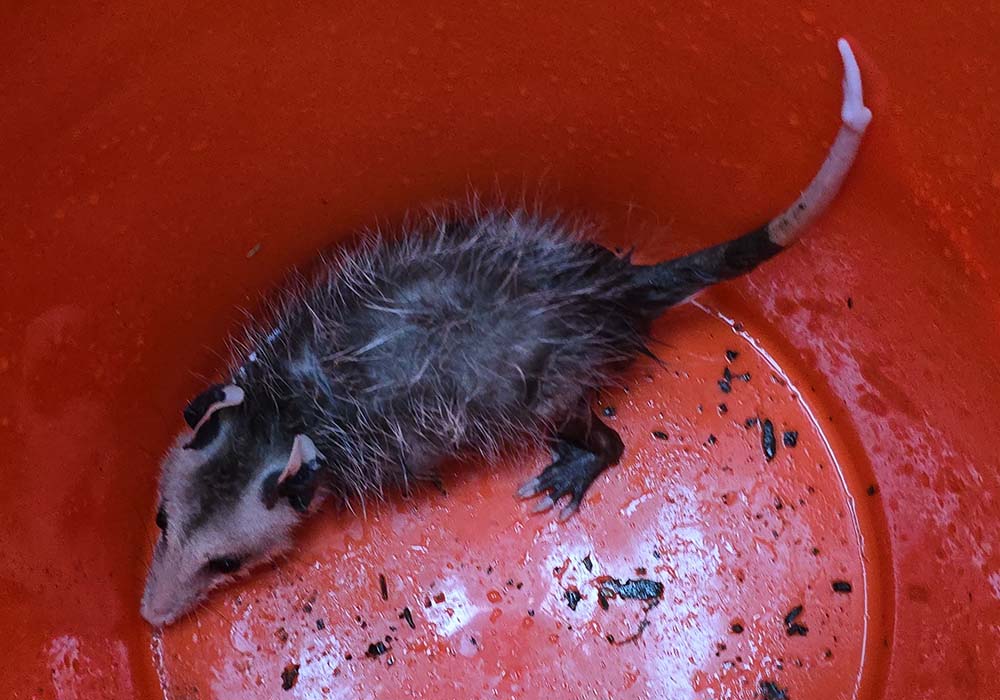
Tiny Possum in a Bucket

An Unexpected Visitor

Every so often, farm life hands you a story in a five-gallon bucket.

This week, our bucket mousetrap caught something that was very much not a mouse. Down inside sat a young opossum, crouched low with the solemn expression of someone who had made several questionable decisions after dark.

Thankfully, he looked alive, unharmed, and old enough to release.

So there I stood, holding a tiny possum in a bucket situation I had not planned for.

Read More

Categories: Farm Life

Rhythm of Late April

Spring never arrives in just one grand entrance on a small farm. It shows up in layers: new chores, shifting routines, seedlings asking for more room, and the constant glance toward the sky hoping for rain. The month has brought plenty to do here at The Tart Farm, along with the reminder that every season has its own pace. Now we are finally falling into step with the rhythm of late April.

The hens have been laying well, but they have also made their feelings clear about the new nesting boxes. Lately, more eggs have been appearing on the ground instead of in the boxes, which usually means the accommodations need a little improvement. In this case, the boxes need deeper nesting material to make them more inviting.

That will be one of the next small but important fixes. Chickens are wonderfully productive, but they are also creatures of habit and comfort. Sometimes the smallest adjustments make all the difference.

Read More